
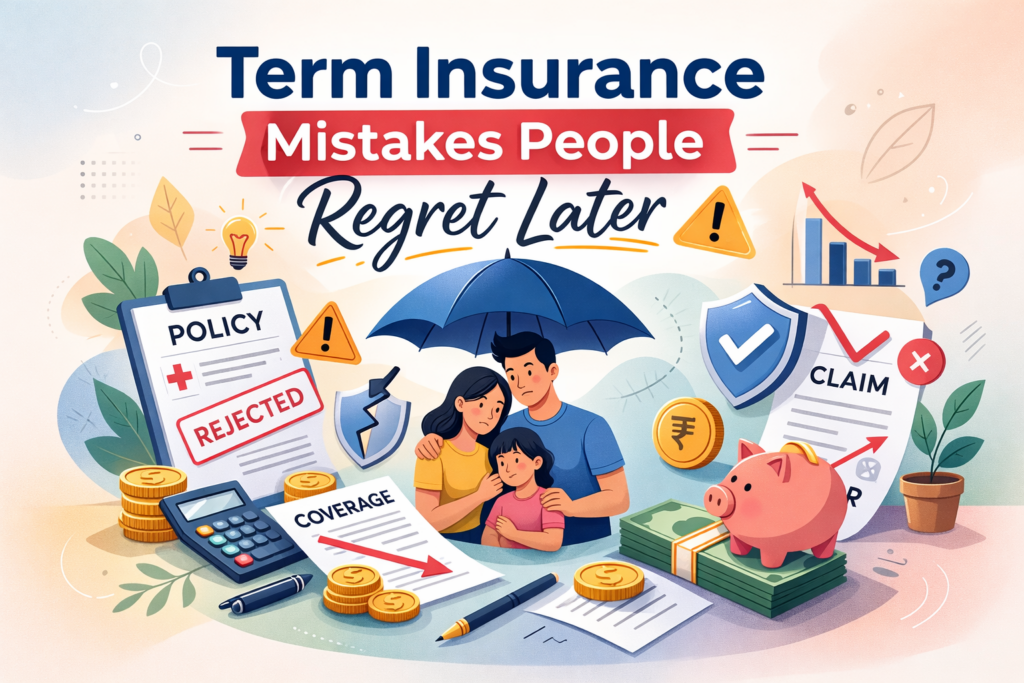
Term Insurance Mistakes People Regret Later
Many people buy term insurance once and forget about it.
They believe the job is done.
But years later, families realise small mistakes made during purchase can have big consequences.
Term insurance is simple.
Mistakes around it are common.
Here are the most common term insurance mistakes people regret later.
Buying Too Little Coverage
The biggest mistake is choosing a small cover just to reduce premium.
A ₹25–30 lakh cover may look sufficient today.
But considering inflation, loans and future expenses, it may not protect the family.
A simple thumb rule is 10 to 15 times annual income plus liabilities.
Term insurance is not about saving premium.
It is about replacing income.
Buying Late
Many people delay term insurance thinking they are young and healthy.
The reality is simple.
Premium increases with age and medical risks appear unexpectedly.
Buying early locks lower premium and ensures coverage before health issues arise.
Time is the biggest advantage in term insurance.
Hiding Medical Information
Some buyers hide smoking habits, existing diseases or past treatments to reduce premium.
This creates risk of claim rejection later.
Insurance works on disclosure.
Transparency protects family, not lower premium.
Always declare everything honestly.
Choosing Return of Premium Plans
Return of premium plans look attractive because money comes back.
But the premium is significantly higher and reduces investing flexibility.
Term insurance should provide protection.
Investments should be separate.
Mixing both often leads to inefficient financial planning.
Ignoring Inflation
A cover chosen today may not be sufficient after 15 years.
Expenses rise, lifestyle changes and responsibilities increase.
Reviewing coverage periodically or choosing increasing cover options helps manage inflation risk.
Not Adding Riders
Basic term cover protects death risk.
But riders like critical illness or disability can provide additional protection.
Many people skip riders and later realise gaps when unexpected health events occur.
Protection planning should consider multiple risks.
Not Informing Family
Surprisingly common mistake.
Policy details remain in email inbox or documents unknown to family members.
In difficult times, families struggle to locate policies.
Share policy details, nominee information and claim process clearly.
Choosing Based Only on Premium
Lowest premium does not always mean best policy.
Claim settlement track record, insurer reputation, features and service matter.
Protection decisions should focus on reliability.
Simple MoneyNivesh Academy Insight
Term insurance is not a product.
It is a long term protection decision.
Small mistakes made once can impact family many years later.
Buying early, choosing adequate cover, declaring honestly and reviewing periodically makes term insurance truly effective.
Protection first.
Everything else follows.
Financial protection is only one part of planning.
Understanding how much your future goals will cost after inflation is equally important.
The MoneyNivesh Financial Goal Planning Calculator helps you estimate the real cost of life goals such as retirement, child education and emergency planning. It also shows how inflation impacts your savings over time and how much you should invest to stay on track.
Instead of guessing, you can plan with clarity and align your term insurance, investments and savings with actual life goals.
You can explore the calculator in the MoneyNivesh Tools section and start building a plan that grows with your future needs.