
Most people start investing before they start protecting.
They open SIPs.
They buy stocks.
They plan retirement.
But one unexpected expense can break everything.
Job loss.
Medical emergency.
Family responsibility.
Sudden relocation.
That is where an emergency fund becomes your financial shock absorber.
💡 What Is an Emergency Fund?
An emergency fund is money kept aside only for unexpected situations — not vacations, gadgets, or festivals.
It gives you three powerful benefits:
• Peace of mind
• Protection from debt
• Ability to continue long-term investments without interruption
Without it, one crisis forces you to:
• Break investments
• Swipe credit cards
• Take personal loans at high interest
🧠 Why 6 Months Expense Model Works
The simplest rule used globally is:
👉 Save at least 6 months of essential expenses
This covers the average time required to:
• Find a new job
• Recover from a health situation
• Stabilize finances after disruption
If your job is unstable, business income fluctuates, or you have dependents, the buffer should be higher (9–12 months).
📊 Step-by-Step : How to Calculate Your Ideal Emergency Fund
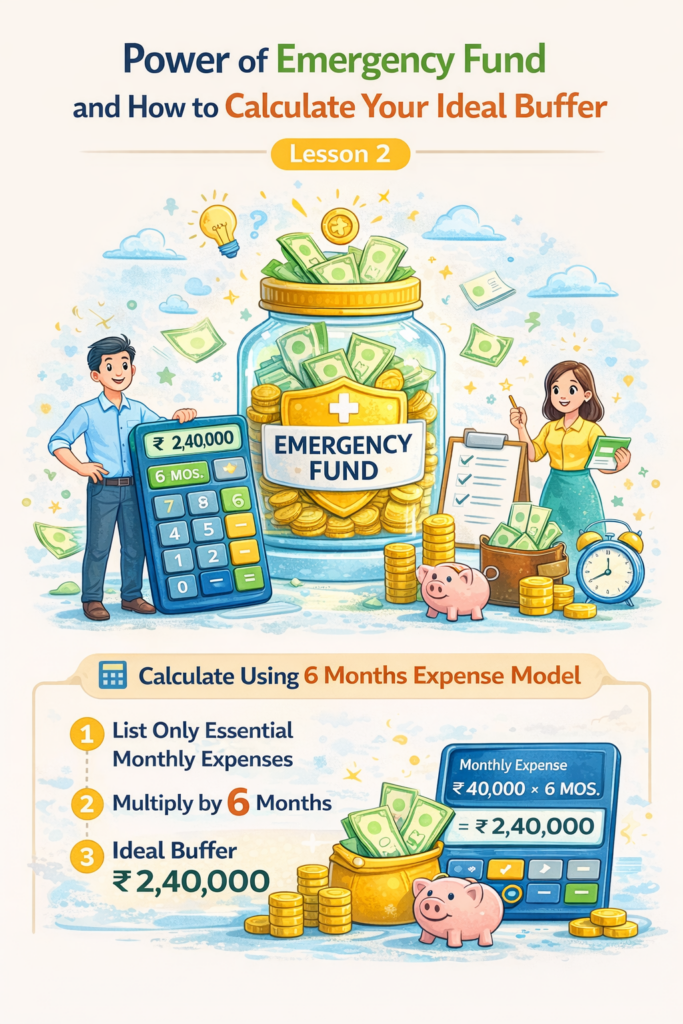
Step 1 : List Only Essential Monthly Expenses
Include:
• Rent / EMI
• Groceries
• Utilities
• Insurance premiums
• School fees
• Basic transport
• Medicines
Exclude:
• Shopping
• Travel
• Dining out
• Entertainment
Step 2 : Calculate Monthly Essential Expense
Example:
Rent / EMI → ₹20,000
Groceries → ₹10,000
Utilities → ₹4,000
Insurance → ₹3,000
Transport → ₹3,000
Total essential expense = ₹40,000
Step 3 : Apply the 6 Month Formula
Emergency Fund = Monthly Essential Expense × 6
₹40,000 × 6 = ₹2,40,000
That is your minimum safety buffer.
🔁 When Should You Increase the Buffer?
Increase to 9–12 months if:
• Single income family
• Freelance or business income
• Medical history in family
• Planning career break
• High EMIs
🏦 Where Should You Keep Emergency Fund?
Emergency fund should be safe and liquid — not invested for returns.
Good options:
• Savings account
• Sweep FD
• Liquid mutual funds
Avoid:
• Stocks
• Long lock-in investments
• Real estate
Because emergency money must be available immediately.
⚠️ Biggest Mistake People Make
They invest first and plan safety later.
Then one emergency forces them to exit investments at the worst time.
Emergency fund is not low priority money.
It is the foundation of wealth building.
✅ Simple Action Plan
Calculate essential expenses
Multiply by 6
Start building monthly
Automate savings
Review every year
Even small monthly contributions build strong protection.
🔎 How MoneyNivesh Tools Can Help
You can use the MoneyNivesh Goal Planning Calculator to:
• Estimate monthly expenses
• Adjust inflation impact
• Set emergency fund targets
• Track progress alongside investments
Because wealth building starts with stability, not risk.
Your emergency fund is your first financial freedom milestone.